

Love and Lies: How to Identify and Avoid Romance Scams
February 19, 2026 4:27 am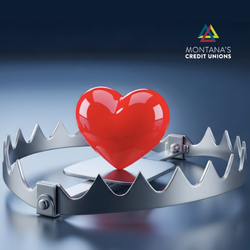 by Michelle Skinner, Communications Director
February may be the month of love — roses, chocolates, and an alarming number of commercials featuring diamond rings — but it’s also prime season for something far less romantic: romance scams. While some people are finding their “forever,” others are finding that the person they’ve been texting for months is a criminal sitting three time zones away with a script, a fake profile picture, and a talent for emotional manipulation.
If that mental picture makes you want to clutch your pearls, good. Romance scams are big, costly, and painfully effective. In fact, victims lost nearly $3 billion (that’s with a B) to romance scams in 2024 alone. (We don’t have perfectly accurate data from 2025 yet.) But with a little knowledge (and a splash of healthy skepticism), you can protect your heart and your bank account for your own happy ever after.
What Even Is a Romance Scam?
A romance scam happens when someone creates a fake identity to establish a relationship — usually online — with the intention of gaining the victim’s trust and ultimately their money. Instead of “I love you,” think “I love your cash and I’m really good at pretending to love you.” It’s as if your favorite rom-com turns into a horror movie when the soulmate is a fake, and your money disappears into the ether. You can’t even begin to guess the ending unless you learn to spot the foreshadowing.
These scams often play out over weeks or months. Scammers aren’t in a hurry to win your trust — they play the long game of emotional manipulation until you’re hooked. They mirror your hobbies, complement your smile, and agree with our stance on pickle juice in beer. (It’s disgusting, by the way.) Once you’re connected and completely smitten, they make their move.
Common Types of Romance Scams
Romance scams come in more flavors than Baskin-Robbins, and none of them are butter pecan. Instead, you’ll see some of these common types:
- The “Far-Away Love” Scam: They’re revitalizing a Scottish castle. They’re deployed overseas. They’re shooting a movie across the continent. They’re always somewhere just inconvenient enough to avoid meeting IRL (in real life). Convenient for them — and it should be suspicious for you. An attractive bachelor looking for someone to share his Scottish castle with a lucky lady? That gives off major “2016 Hallmark movie” vibes.
- The “Emergency Money” Scam: Their luggage was stolen. Their dog is sick. Their passport vanished. Their rental Porsche was stolen. The point is: they “need” money — urgently, and you’re the only one they trust. This scam has more emotional tugs than a Jane Austin novel. Be sure to channel your inner Elizabeth before completely trusting Darcy.
- The “Investment Opportunity” Scam: Once the emotional bond is formed, they reveal they’re into crypto or the latest “can’t-miss” opportunity that — you guessed it — you should totally invest in, too. They’ll even help you set up accounts, as long as you send them the money or your account numbers. Spoiler: the only thing you’re investing in is their next scam.
- The “Pig Butchering” Scam: Okay, so this name is pretty dramatic, but at least no blood is involved. In this scam, a victim is showered with affection, gifts, and trust before being financially “slaughtered” through fake investment platforms.
Common Red Flags
Save this list. Tattoo it on your heart to cover up your ex’s name. Screenshot it. Share it with your aunt who loves meeting people on Facebook.
- They move the relationship so fast they give whirlwind romances a bad reputation: If they declare their eternal love before you’ve even had a chance to finish your latte, it’s a problem.
- They avoid video chats or meeting in person: Bad Wi-Fi, broken cameras, or more technical difficulties than that one coworker who doesn’t know their mic is on — excuses, excuses. If they’re always unavailable for a face-to-face moment, don’t ignore that.
- Their photos look… professionally unattainable: If they look like they just stepped off a runway or out of vampire drama, do a reverse image search. Turns out, a surprising number of models and minor celebrities are “looking for love” in the DMs of unsuspecting romantics.
- They create a sense of urgency: Scammers love pressure. The more panic you feel, the less clearly you think. They’re “banking” on it.
- They ask for money, crypto, or gift cards: This is the big one. Nobody who loves you should need you to buy them $600 in gift cards for “work expenses.”
How to Protect Yourself (and Your Heart)
- Slow down: Love is patient. Love is kind. Love doesn’t have a speed limit — but scammers sure do. Take your time to get to know the person.
- Do your research: Nothing says “budding romance” like some mild cyber-stalking. Come on; everyone does it. Google their photo. Google their name. Google suspicious phrases they send. Scammers reuse scripts like sitcom writers.
- Keep your personal info personal: Don’t share your bank details, Social Security number, pet names, or anything a scammer could use to impersonate you. This is just a really good rule of thumb whenever you’re asked for these details. Just don’t do it.
- Talk to someone you trust: If you’re excited about someone you’ve met online, great! Tell a friend or family member about them. Sometimes an outside perspective catches what you’ve missed.
- Never send money or financial information: This one’s worth repeating. If you feel tempted, step away from your device and breathe deeply. You work hard for your money. You should work just as hard to keep it.
What to Do If You’ve Been Scammed
First: take a breath. Romance scams are engineered to trick smart, kind, emotionally intelligent people. You’re not foolish — you were targeted. Don’t make yourself the villain in this story.
Here’s what to do next:
- Break Contact Immediately: Block them on every platform. Don’t explain, don’t confront. Just disappear like a ghost with good boundaries.
- Report the Scam: File a report with:
- The Federal Trade Commission (FTC)
- IC3.gov (for internet crimes)
- Your credit union or credit card company, if money was transferred
- The dating site or platform where you met them
- Secure Your Accounts: Change passwords, enable multi-factor authentication, check for unusual activity, and lock down your social media privacy settings.
- Talk to Someone You Trust: Not only for emotional support, but also to help you regain perspective. Scammers are skilled manipulators — breaking free can feel like escaping a fog.
- Be Kind to Yourself: Your capacity for affection is a strength, not a flaw. Learn from the experience, but don’t let it harden you.
Final Thoughts: Love Is Real — But So Are Scammers
February is full of warmth, affection, and romance — but it’s also the perfect time to remember that 98% of the most epic love stories only exist in romance novels. With rising online connections comes rising online risks, and the best armor you can wear is awareness.
So celebrate love this month — just keep your head clear, your heart open, and your wallet firmly zipped.

Comments are closed here.